
‘For me, playing the cello means telling stories.’
-Joanna Sachryn
About
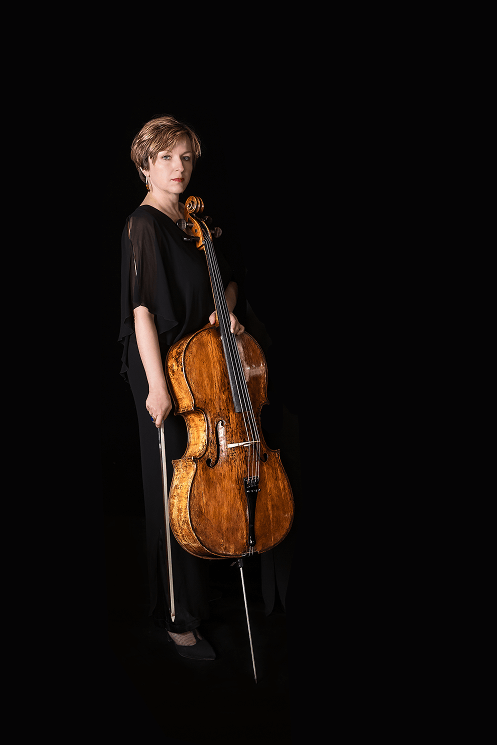
Polish-born cellist Joanna Sachryn captivates audiences with her expressiveness and a personality that deliberately defies categorisation. Her enormous stage presence and unmistakable cello sound reflect her universal experience as a musician.
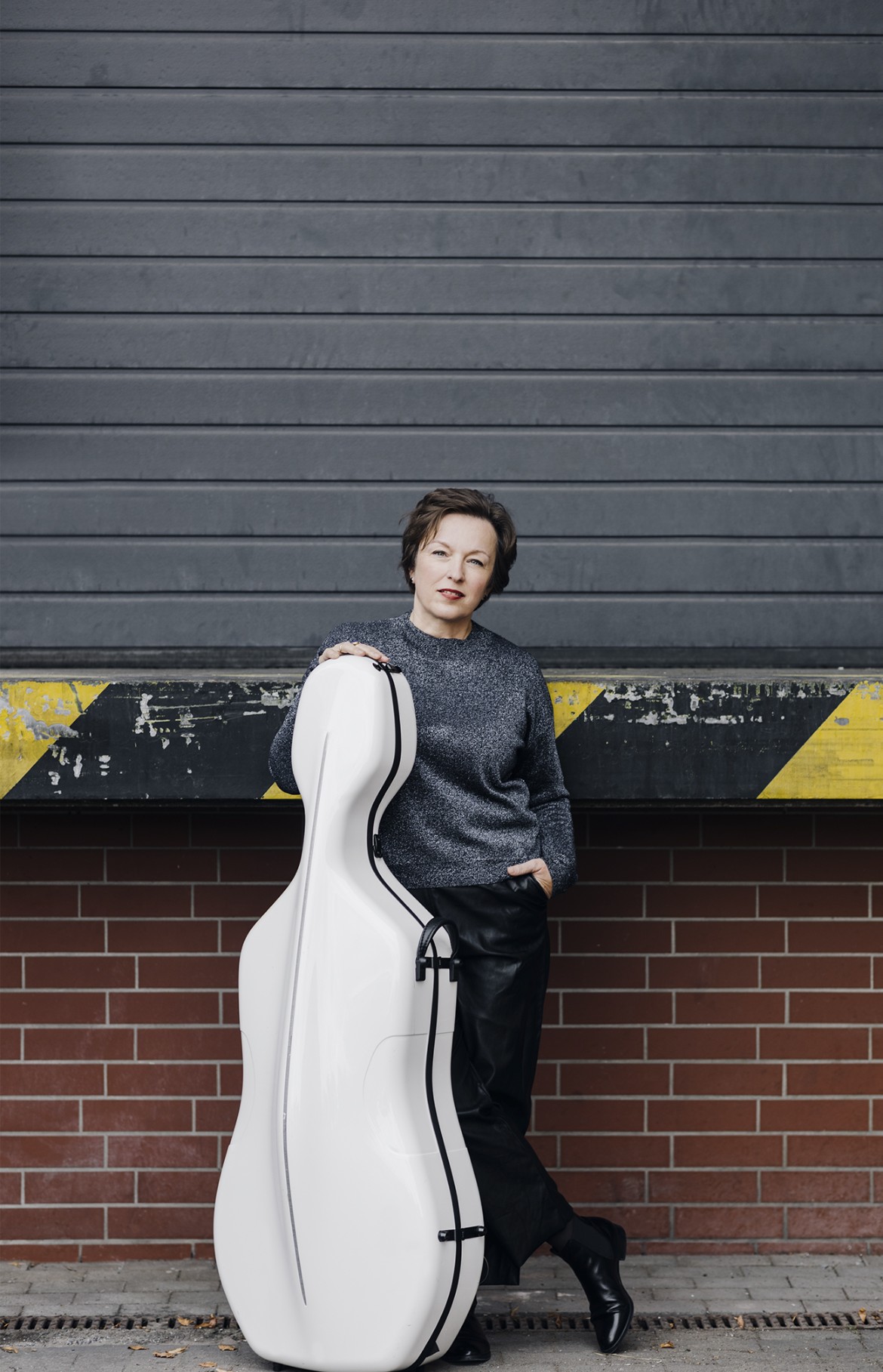
PHOTO by Zuzanna Specjal
“I value versatility and, since my early years, have seen the universal and the broadest possible field of knowledge and perception as the ideal for an artist. Knowledge and experience play a major role in the perception of a composition. They give the inner creative power a whole range of expressive possibilities and enrich our imagination. This allows me to fill the space between the notes with a message, to develop the composer’s thoughts and emotions from the musical text, and to give them my personal contour. The cello is my voice. For me, making music means telling stories.”
Her repertoire includes works by J. Porpora , F. Couperin, J. Haydn, L. Boccherini, the great Romantic concertos by C. Saint-Saëns, E. Lalo, R. Schumann, A. Dvorak, E. Elgar, Shostakovich, F. Gulda’s Concerto for Cello and Wind Orchestra, and R. Strauss’ Don Quixote.She is particularly
fond of Concerto No. 1 by Polish composer Grazyna Bacewicz and the exceptionally colourful and varied concerto by Paul Hindemith (1940).Collaboration and exchange with contemporary composers is very important to her. In 2023, she performed the world premiere of Tomasz Skweres’ Paysage Intime, dedicated to her, with the Madrid Festival Orchestra. She performed the first cello and piano version of this work with Spanish pianist Pablo Amorós at the Festival Musika Música Bilbao in 2022. In 2019, she gave the world premiere of Katakomben for organ, violin and cello, dedicated to her by Tomasz, in Vienna. The famous Polish composer Krzysztof Meyer dedicated his Adagio serioso Op.141 to her. ( Edition Sikorski)
PHOTO by Zuzanna Specjal
Als Solistin konzertierte sie u.a. mit dem Korean Chamber Orchestra, dem Wernigerode Kammerorchester, dem Philharmonischen Orchester Regensburg, den Württembergischen Symphonikern, dem Oradea Staatsorchester, der Filarmonica „Paul Constantinescu“ Ploiești, der Orquesta Filarmónica de Málaga, dem Deutschen Radio Kammerorchester sowie mit Dirigenten wie Martin Fischer-Dieskau, Walter Hilgers, Lior Shambadal, Jin Wang, Ricardo Medeiros, Tetsuro Ban, Dorian Keilhack und Raul Grüneis. Gemeinsam mit dem Deutschen Radio Kammerorchester spielte sie Kol Nidrei von M. Bruch und die Élégie von G. Fauré im Rahmen der Holocaust Memorial Concerts der Vereinten Nationen in Genf und im LAC Lugano.
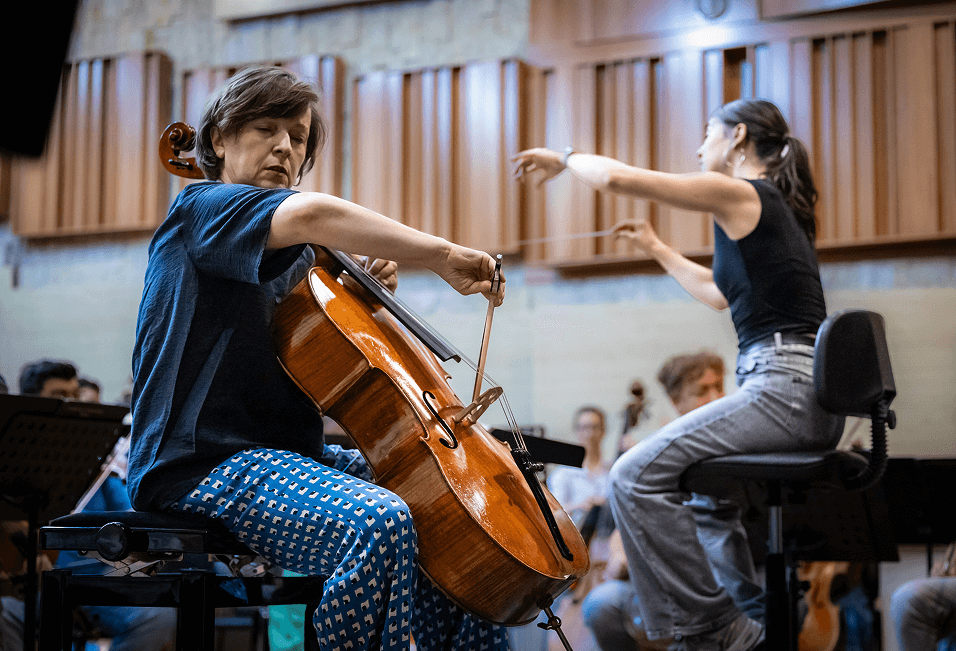
Her great passion is chamber music. Since 1999, she has been the cellist of the internationally renowned Cologne Piano Trio. Together with colleagues from the Vienna Philharmonic Orchestra, she forms the Vienna Cello Ensemble 5+1.
During her studies, she already performed with pianist Paul Rivinius. Their joint appearances — including at the Alte Oper Frankfurt and the broadcasting hall of Hessischer Rundfunk — were enthusiastically received by both audiences and the press. The duo reunited in the 2017/18 season.
PHOTO by pedagogy privat
The world premiere recording of the sonatas by Ferdinand Hiller and Anton Urspruch, Forgotten Treasures, was released by Kaleidos in 2020, followed by the CD Meyer–Shostakovich in 2023.
She has performed on international stages and at festivals such as the Alte Oper Frankfurt, Musikverein Vienna, Cecilia Meirelles Hall Rio de Janeiro, Seoul Kumho Concert Hall, Lotte Concert Hall and Seoul Arts Centre, Suntory Hall Tokyo, Beijing National Centre for the Performing Arts, Oriental Art Centre and Shanghai Symphony Hall, Shenzhen City Hall, Schleswig-Holstein Music Festival, Menuhin Festival Gstaad, Shanghai Spring Festival, International Cello Festival Katowice (Poland), Festival Musika-Musika Bilbao, and the Mendelssohn Festival Duszniki-Zdrój (Poland).
A prize-winner in national competitions, she graduated with honours from the Music Lyceum in Szczecin and continued her studies at the Frankfurt Hochschule für Musik und Darstellende Kunst with Professor Gerhard Mantel. After completing her concert exam, a scholarship enabled her to study in London with the world-famous cello teacher William Pleeth. The decisive influence of repertoire studies with Mstislav Rostropovich and Daniil Shafran consolidated her roots in the Slavic tradition.
PHOTO by Hog Fei Ni 01
At the age of 17, Joanna Sachryn attracted attention as Poland’s youngest solo cellist at the Szczecin Opera House. After completing her studies, she was engaged by leading European orchestras, performing under renowned conductors and alongside outstanding musicians, including those from the Hamburg State Opera, The Philharmonia Orchestra London, the WDR Symphony Orchestra, the Munich Philharmonic, the Deutsche Kammerphilharmonie Bremen, and The Chamber Orchestra of Europe.
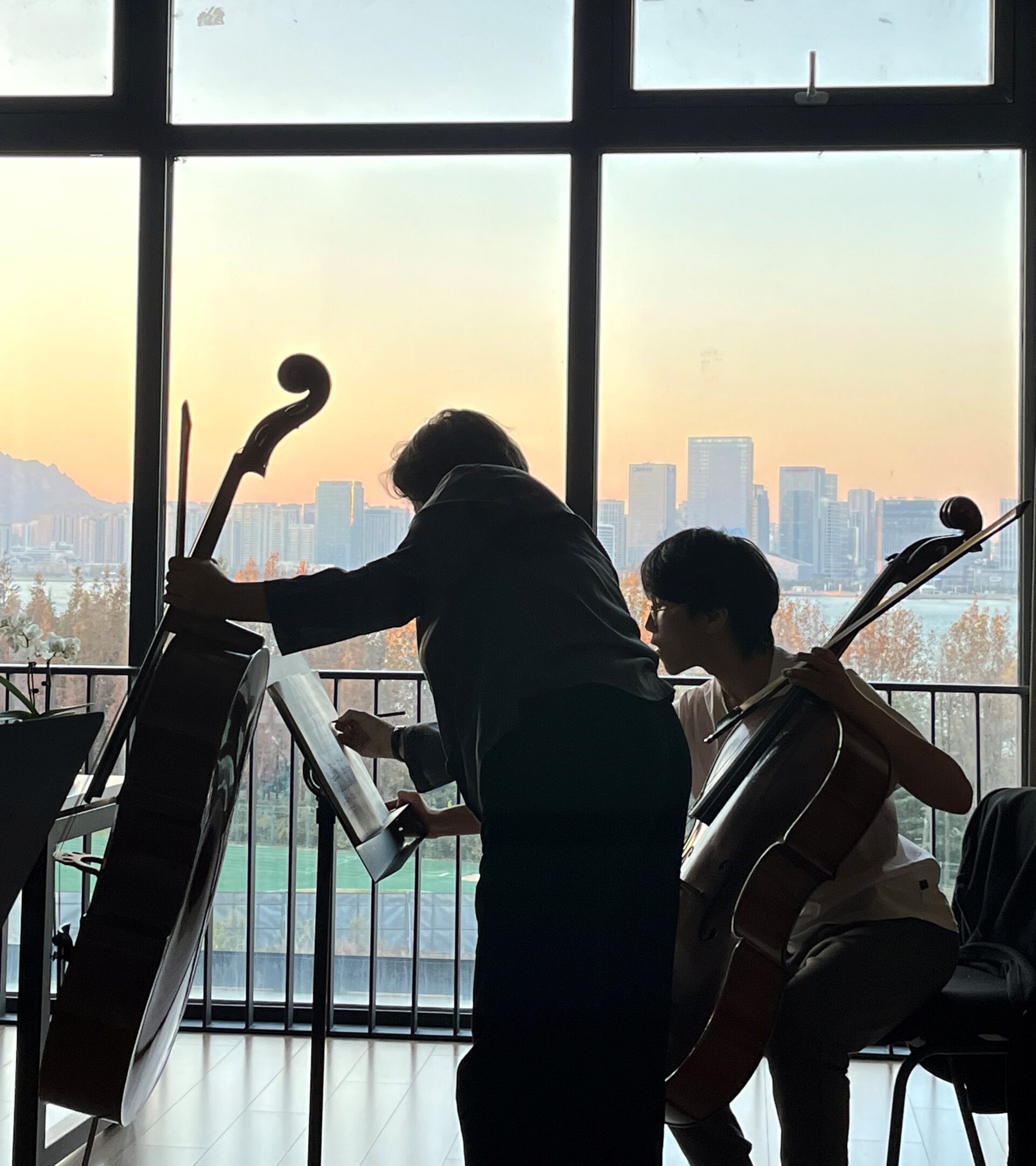
Pedagogy
Joanna is Professor of Cello at the Yehudi Menuhin School in Qingdao, China, and a guest lecturer at the Academy of Music Berlin. She regularly gives masterclasses at institutions such as the International Haus Marteau (haus-marteau.de).
She has served as Visiting Professor at Tongji University in Shanghai and taught at the Academy of Music in Kassel. She has also given masterclasses at other prestigious institutions, including the Beijing Central Conservatory, Shanghai Conservatory, Zhejiang Conservatory in Hangzhou, the Academy of Music in Katowice, the University of São Paulo, and Seoul National University.
PHOTO by pedagogy privat
“Teaching – engaging in dialogue with young, curious musicians – fascinates me deeply. This exchange constantly sharpens and renews one’s own perspective. The essential cornerstones of my teaching are awareness of tradition, work with the text, stylistic understanding, practice methodology, and the integration of musical and interpretative ideas with their technical realization. The goal is always the development of each student’s individual independence. My own studies brought me to the greatest cellists and personalities of our time. This allows me to grow within a tradition that I consciously continue in my teaching.”
“I was fortunate to study cello repertoire with Mstislav Rostropovich for over two years. He paid great attention to tone and nuanced vibrato. In his view, vibrato is not a constant tremor, but a question of intelligence. For me, this remains absolutely true. The right arm is responsible for energy transfer, timbre, dynamics, diction, and articulation. The left hand frets — the right hand makes the music.”
“For William Pleeth, it was essential to be guided by purely musical ideas, not by fingerings or technical considerations.”
“Making music with Nikolaus Harnoncourt profoundly changed my understanding of music. His courage to think and play beyond the familiar deeply influenced me and affirmed my own approach.
For me, fidelity to the musical text is like building a house with solid walls — within it, I am free to move around.”